

- Latin name
- Liquidambar orientalis, Liquidambar styraciflua
- Family
- Sweetgum family (Altingiaceae)
- Origin
- Turkey (Asia Minor), Honduras
- Parts used
- balsam from wounded bark
- Raw materials
- resinoid, purified balsam
- Extraction
- extraction or purification of the balsam
- Olfactory group
- amber, leather (balsamic)
- Position in the pyramid
- base
- Synthetic substitutes
- cinnamic alcohols and esters, balsamic bases
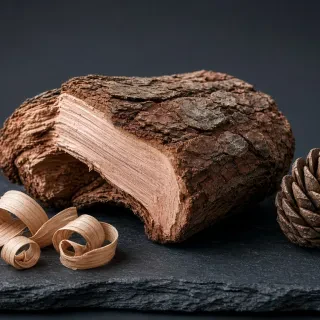
Styrax is the thick, fragrant balsam of sweetgum (Liquidambar) trees. To obtain it, the bark is cut or slightly wounded, and the tree secretes a viscous resin that is collected and purified. The best-known styrax comes from Turkey (Asia Minor) and from the Americas.
How it smells: balsamic, warm, slightly smoky and leathery, with a floral, hyacinth-like and cinnamon shade. Styrax sounds dense and vintage, recalling old leather furniture and fine lacquers.
Styrax is one of the classic fixatives: it holds a fragrance, smooths transitions and adds leathery-amber depth. It is loved in leather and oud compositions, and in florals — for hyacinth and narcissus.
What it pairs with: with leather and birch — the classic Russian leather, with incense and benzoin — resinous compositions, with hyacinth — a spring floral accord, with oud — a dark oriental accord, with vanilla — warm balsamic sweetness.
Good to know: the word styrene comes from styrax — a chemical first isolated from this very balsam; today it is used to make polystyrene.