Pink Pepper
47 fragrances with this note
Part of accords: Fresh spicy, Soft spicy


- Latin name
- Schinus molle, Schinus terebinthifolia
- Family
- Cashew family (Anacardiaceae)
- Origin
- Brazil, Peru, Réunion, Madagascar
- Parts used
- dried berries
- Raw materials
- essential oil, CO₂ extract
- Extraction
- steam distillation or CO₂ extraction of the berries
- Olfactory group
- spicy (fresh spices)
- Position in the pyramid
- top note
- Synthetic substitutes
- terpene bases with limonene and phellandrene
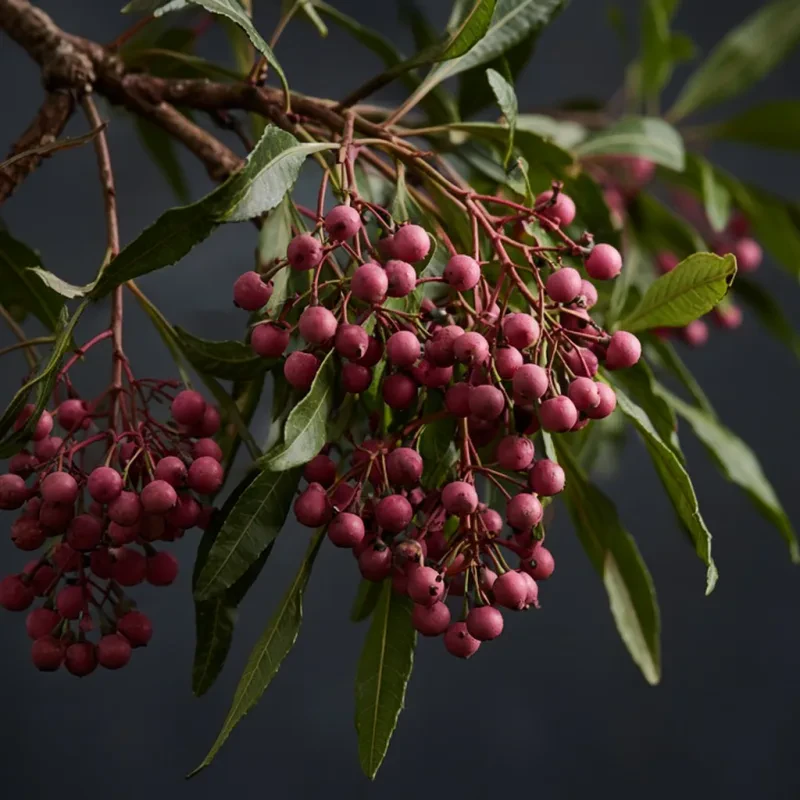
Pink pepper is not pepper at all. These are the berries of the South American “pepper tree”, a relative of mango, pistachio and cashew. The name comes from the resemblance: the small pink-red berries with thin brittle skin look like peppercorns.
How it smells: bright, playful and fresh: a little pepper, a little pine, a berry tartness and a rosy-floral shade. Unlike black pepper, pink pepper neither burns nor tastes bitter — it seems to fizz on the skin like sparkling wine.
Pink pepper became fashionable in perfumery in the early 2000s and has been one of the best-loved top notes ever since. It adds sparkle to the opening and makes a composition feel modern.
What it pairs with: with rose — a fresh “modern rose”, with citrus — lively summer fragrances, with incense and cedar — transparent woods, with musk and iris — light skin-like compositions. It most often sits in the top notes and opens a fragrance.
Good to know: pink peppercorns are also used in cooking, but sparingly: being related to cashew, they may be unsuitable for people allergic to nuts of that family.
Fragrances with Pink Pepper