
Ginger
27 fragrances with this note
Part of accords: Fresh spicy
-
-


- Latin name
- Zingiber officinale
- Family
- Ginger family (Zingiberaceae)
- Origin
- India, China, Nigeria, Madagascar
- Parts used
- rhizome (fresh or dried)
- Raw materials
- essential oil, CO₂ extract
- Extraction
- steam distillation of dried rhizome or CO₂ extraction of fresh rhizome
- Olfactory group
- spicy (fresh spices)
- Position in the pyramid
- top note
- Synthetic substitutes
- citral, zingiberene (components of the natural oil)
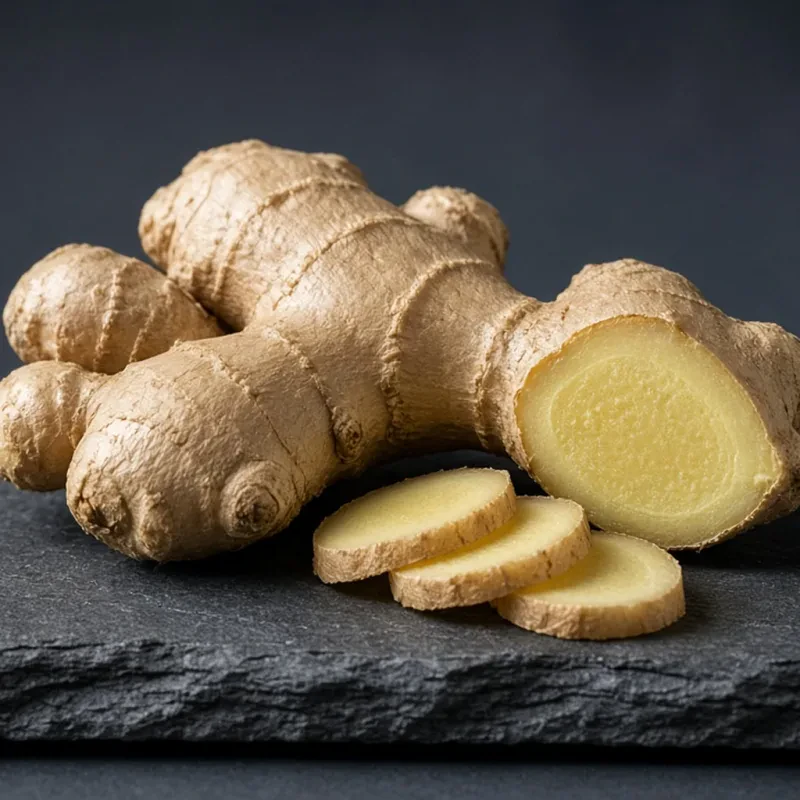
Ginger is a tropical plant whose scent lies not in the flower or the leaves but in the juicy, knobbly rhizome. Perfumery uses it both dried and fresh — and these are two different notes.
How it smells: fresh ginger is sparkling, lemony, sharp and invigorating, like ginger lemonade. Dried ginger is warmer, woody-spicy, with a faintly peppery shade. Ginger adds energy, “warmth without sweetness” and a slight tingle to the opening.
The heat of ginger in food comes from substances that are barely volatile, so in perfume ginger does not burn — it only invigorates. It is often placed in the top notes to wake a composition up in the first minutes.
What it pairs with: with citrus and bergamot — fresh summer fragrances, with cardamom and pink pepper — modern “fresh spice”, with vetiver and cedar — masculine woody compositions, with vanilla and honey — cosy gourmands, with tea — light tea scents.
Good to know: CO₂ extract of fresh ginger conveys the smell of freshly grated root so precisely that perfumers tell it apart from dried ginger oil at the first sniff.
Fragrances with Ginger