
- Latin name
- Betula pendula, Betula pubescens
- Family
- Birch family (Betulaceae)
- Origin
- Eastern and Northern Europe
- Parts used
- bark (tar); leaves and buds
- Raw materials
- rectified birch tar, leaf and bud extracts
- Extraction
- dry distillation of the bark (tar)
- Olfactory group
- leather, woody (smoky)
- Position in the pyramid
- base
- Synthetic substitutes
- guaiacol, cresols, leather bases
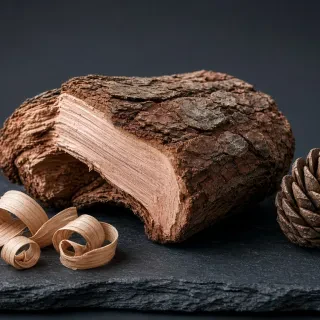
Birch has two completely different sides in perfumery. The first is birch tar: a dark resinous liquid obtained by dry distillation of the bark. The second is the fresh leaves and buds, which give a green, springlike shade.
How it smells: the tar is smoky, leathery and resinous, like a campfire or an old leather jacket; the leaves and buds are fresh, green and slightly balsamic. Most often birch in perfume means the smoky-leathery note.
Leather was once treated with birch tar in Russia, and its recognisable smell became the basis of the Russian leather style. Today tar for perfumery is carefully purified, and its character is often reinforced with synthetic leather molecules.
What it pairs with: with leather and tobacco — classic smoky compositions, with pineapple and musk — modern fruity-chypre masculine fragrances, with incense — solemn smoke, with vetiver and cedar — dry woody scents, with iris — an elegant “leather powder”.
Good to know: birch tar is one of humanity's oldest glues: archaeologists have found traces of its use by Neanderthals, who used it to fix points to their spears.