
- Latin name
- Santalum spicatum; plantation-grown Santalum album
- Family
- Sandalwood family (Santalaceae)
- Origin
- Western Australia; plantations in northern Australia
- Parts used
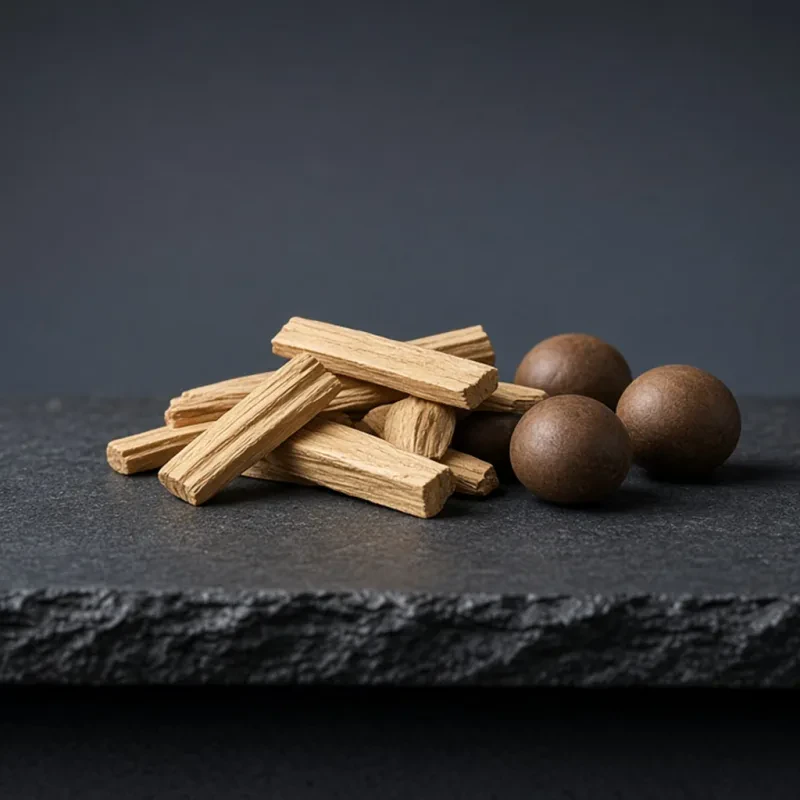
- heartwood and roots
- Raw materials
- essential oil
- Extraction
- steam distillation or extraction
- Olfactory group
- woody
- Position in the pyramid
- base
- Synthetic substitutes
- Javanol, Ebanol, Sandalore
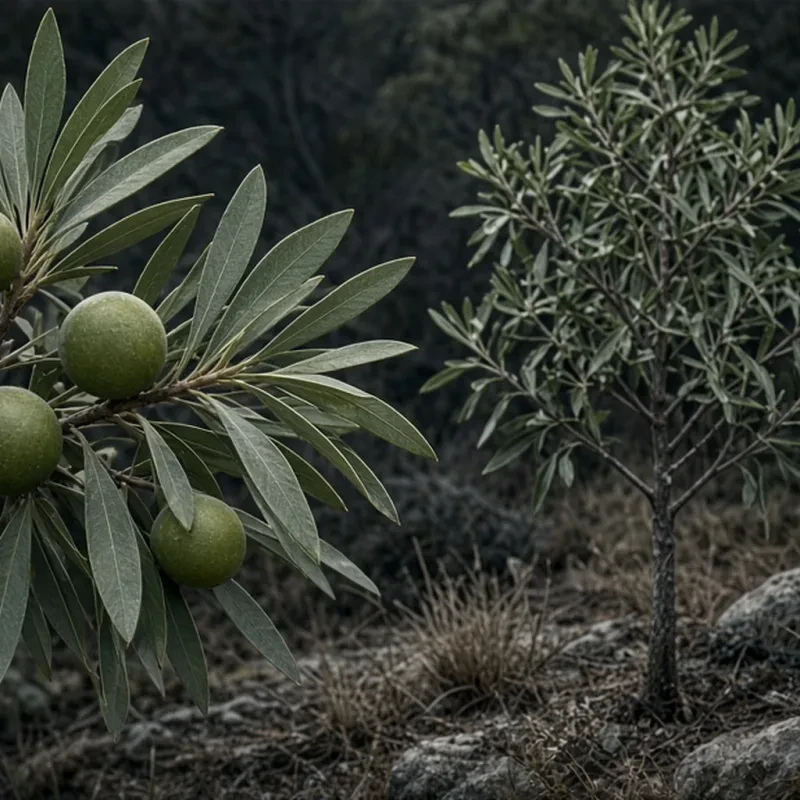
Australian sandalwood means, first, the native species Santalum spicatum from the arid regions of Western Australia and, second, plantations of Indian sandalwood (Santalum album) in the north of the country. Today Australia is one of the main legal sources of sandalwood oil.
How it smells: Santalum spicatum oil is drier, more resinous and fresher than Indian, with a faintly bitter and green shade; plantation album is closer to the classic creamy Mysore sandalwood.
When stocks of Indian sandalwood dwindled, Australian wood became a reliable alternative: harvesting here is controlled, and plantations are grown specifically for perfumery. It is an example of a more responsible approach to a precious material.
What it pairs with: with rose and jasmine — a warm floral base, with vanilla — creamy sweetness, with iris — powdery wood, with incense — resinous-woody compositions, with citrus — fresh wood.
Good to know: sandalwood has been exported from Western Australia since the nineteenth century — at that time mostly to Asia for temple incense.