Sandalwood
94 fragrances with this note
Part of accords: Woody, Creamy, Milky
-
-

-


- Latin name
- Santalum album
- Family
- Sandalwood family (Santalaceae)
- Origin
- India (Mysore), Sri Lanka, Indonesia; plantations in Australia
- Parts used
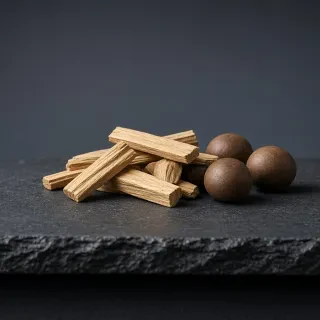
- heartwood and roots of trees 15–30 years old or more
- Raw materials
- essential oil
- Extraction
- steam distillation of chipped wood
- Olfactory group
- woody
- Position in the pyramid
- heart and base
- Synthetic substitutes
- Javanol, Ebanol, Sandalore, Bacdanol, Polysantol
Sandalwood is a small evergreen semi-parasitic tree: it takes part of its nutrients from the roots of neighbouring plants. The scent builds up in the heartwood and roots slowly, over years: a young tree barely smells, so oil is made only from trees at least 15–30 years old.
How it smells: soft, creamy, warm wood with a milky, slightly sweet shade, without the sharpness of cedar or the smoke of oud. Sandalwood “embraces” a composition: it smooths out the flowers, adds warmth to the skin and lasts long in the base.
Indian Mysore sandalwood is considered the benchmark, but because of overharvesting its collection in India has been strictly limited and the species is listed as vulnerable. So today perfumers combine plantation oil (Australia, New Caledonia) with synthetic sandalwood molecules — they recreate the creamy softness without harming forests.
What it pairs with: sandalwood is a universal partner. With rose and oud it forms the classic oriental pair, with ylang-ylang and jasmine — warm skin-like florals, with fig, milky notes and cardamom — modern cosy fragrances. In woody compositions it softens dry cedar and smoky vetiver, and in gourmands it underlines vanilla and tonka.
Good to know: sandalwood keeps its scent for decades — a sandalwood object stays fragrant many years later. That is why in India it has long been carved into boxes, fans and prayer beads, and sandalwood paste is used in temple rituals.
Fragrances with Sandalwood