
- Latin name
- Camellia sinensis
- Family
- Tea family (Theaceae)
- Origin
- China, India, Sri Lanka; in perfume mostly an accord
- Parts used
- fermented leaves
- Raw materials
- black tea absolute (rarely), tea accords
- Extraction
- extraction; the accord — synthesis
- Olfactory group
- aromatic, woody (tea)
- Position in the pyramid
- heart
- Synthetic substitutes
- damascones, Hedione, linalool, tea bases
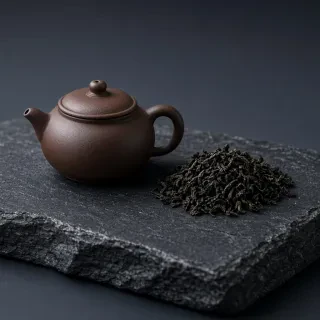
Tea in perfumery, without further detail, means above all black tea: leaves of the tea bush that are withered, rolled and fermented after picking until they darken. It is fermentation that gives tea its deep, warm aroma, unlike fresh green tea.
How it smells: warm, dry and cosy: dark brewed leaves, a faintly smoky and woody shade, a soft honeyed and dried-fruit sweetness, a light astringency. Tea sounds calm, homely and elegant.
Natural tea absolute is rare and expensive, so the tea note is usually built as an accord. Damascones — molecules that smell of dried fruit and rose and are present in real brewed tea — play an important role in it.
What it pairs with: with bergamot — Earl Grey, with lemon — classic tea with lemon, with rose — “rose tea”, with smoke and leather — dark tea compositions, with honey and milk — cosy gourmand fragrances.
Good to know: in China black tea is called “red” — after the colour of the infusion, not the leaves. So “Yunnan red tea” is exactly what Europeans call black tea.