Blackcurrant
23 fragrances with this note
Part of accords: Fruity, Green, Fruity floral


- Latin name
- Ribes nigrum
- Family
- Gooseberry family (Grossulariaceae)
- Origin
- France (Burgundy), the Netherlands, Poland
- Parts used
- winter buds of the bush (and berries — for accords)
- Raw materials
- blackcurrant bud absolute
- Extraction
- solvent extraction
- Olfactory group
- fruity, green
- Position in the pyramid
- top and heart
- Synthetic substitutes
- sulphur-containing molecules with a cassis smell, fruity bases
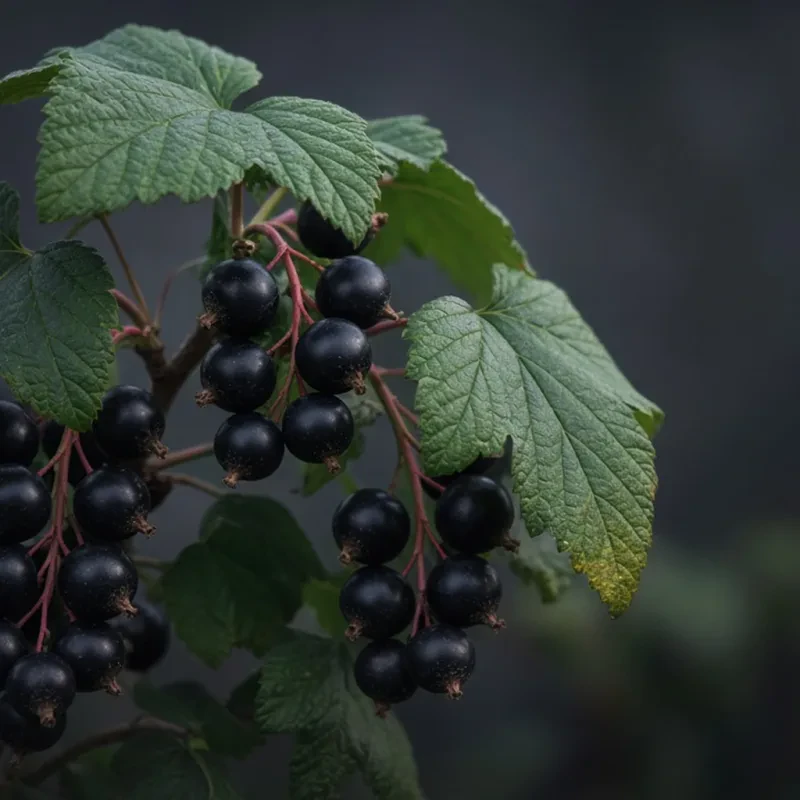
The blackcurrant note (cassis in French) most often comes not from the berries but from the buds of the bush. They are gathered in winter, while still closed and at their most fragrant, and then extracted.
How it smells: a sweet-sour, juicy berry with bright green, almost leafy freshness and a characteristic “catty” shade that perfumers love for its liveliness. Cassis makes a fragrance lively, a little daring and modern.
This piquant shade comes from sulphur compounds that humans can smell in minute amounts. In small doses they turn ordinary “berriness” into the realistic smell of a crushed blackcurrant leaf.
What it pairs with: with rose — the classic cassis-rose, with bergamot and pink pepper — fresh fruity openings, with violet — berry-powdery ones, with patchouli — a fruity chypre, with musk — light juicy compositions.
Good to know: Burgundy is famous not only for wine but also for blackcurrants — it is the home of the celebrated liqueur crème de cassis.
Fragrances with Blackcurrant