

- Latin name
- Citrus maxima
- Family
- Rue family (Rutaceae)
- Origin
- the scent is created in the laboratory
- Parts used
- peel and flesh (as the reference for the scent)
- Raw materials
- citrus accords
- Extraction
- synthesis
- Olfactory group
- citrus
- Position in the pyramid
- top note
- Synthetic substitutes
- nootkatone, limonene, grapefruit bases
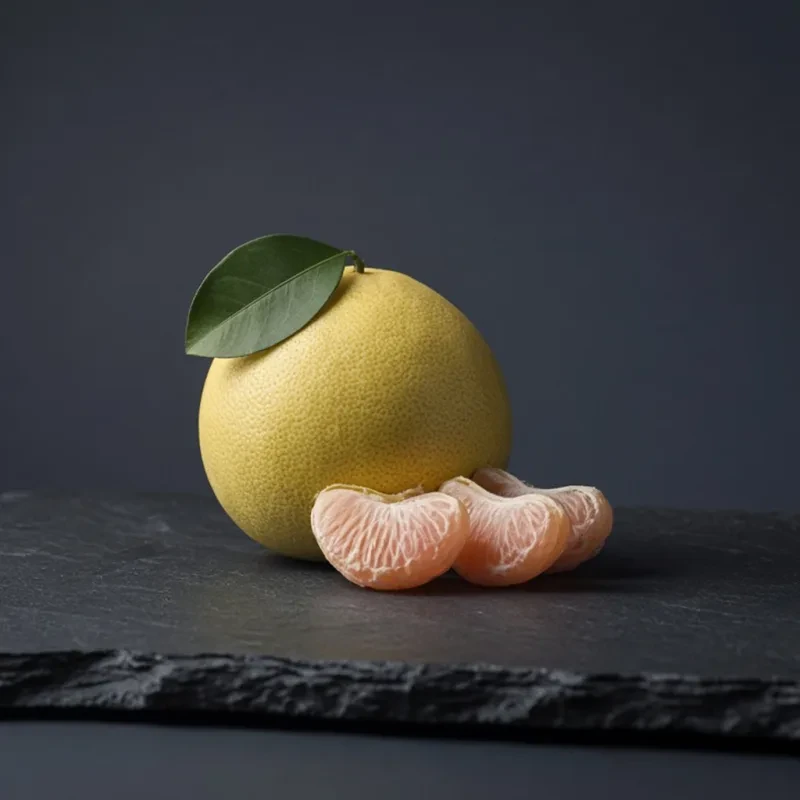
The pomelo is the largest of the citrus fruits: a melon-sized fruit with very thick peel and sweetish flesh. It is one of the “original” citrus fruits; crossed with the orange, it gave rise to the grapefruit.
How it smells: fresh, soft and slightly bitter: juicy flesh, pale zest, a light floral shade and a delicate grapefruit bitterness. Pomelo sounds gentler and sweeter than grapefruit, without its sharp acidity.
Pomelo is closer to grapefruit than to orange: its smell also contains nootkatone — the molecule with a characteristic grapefruit freshness. But there is less of it, so pomelo sounds softer, more watery and calmer.
What it pairs with: with grapefruit and bergamot — fresh citrus openings, with white tea — transparent “clean” fragrances, with ginger — lively freshness, with orange blossom — sunny compositions, with musk — light daytime fragrances.
Good to know: in Asia the pomelo is a symbol of prosperity and family happiness: at Chinese New Year and the Mid-Autumn Festival it is given as a gift and placed on the festive table.

