- Latin name
- Capsicum annuum, Capsicum frutescens
- Family
- Nightshade family (Solanaceae)
- Origin
- the scent is created in the laboratory; the plant is native to the Americas
- Parts used
- fruits (as the reference for the scent)
- Raw materials
- spicy accords, paprika extract (rarely)
- Extraction
- synthesis; extraction (rarely)
- Olfactory group
- spicy (hot)
- Position in the pyramid
- top note and heart
- Synthetic substitutes
- spicy and “hot” molecules, pepper accords
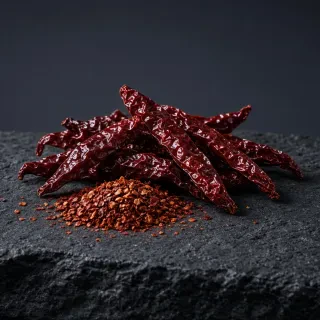
Hot pepper (chilli) is the fruit of plants of the genus Capsicum, native to the Americas. Their heat has no smell: it comes from capsaicin, which we sense on the tongue. So in perfumery “hot pepper” is an accord that conveys an impression of warmth and piquancy.
How it smells: hot, spicy and slightly sweet: dried red pepper, warm paprika, a light smokiness and the green freshness of the pod. Hot pepper sounds bold and energetic, adding a spark to a fragrance.
Black and pink pepper smell resinous and woody, but hot pepper is different: warmer, more “edible”, with vegetable greenness and dry heat. Perfumers use it to make the opening of a fragrance unexpected and sensual.
What it pairs with: with rose — a “hot rose”, with chocolate and cocoa — “chocolate with chilli”, with vanilla — a piquant gourmand contrast, with tobacco and leather — dark evening compositions, with citrus — lively bright fragrances.
Good to know: the heat of peppers is measured on the Scoville scale — from sweet paprika at zero units to the hottest peppers at millions.