




- Latin name
- Cyclamen persicum
- Family
- Primrose family (Primulaceae)
- Origin
- the scent is created in the laboratory
- Parts used
- no material is obtained from the flowers
- Raw materials
- cyclamen aldehyde and floral accords
- Extraction
- synthesis
- Olfactory group
- floral (fresh, watery)
- Position in the pyramid
- heart
- Synthetic substitutes
- cyclamen aldehyde, Helional, Florosa
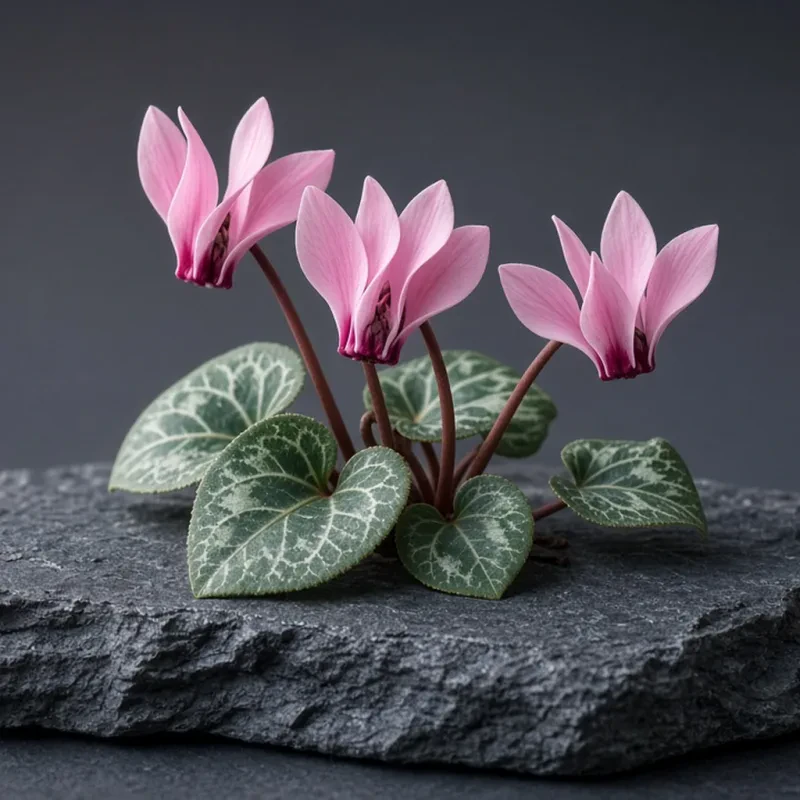
Cyclamen is a houseplant and woodland plant with curved petals that seem swept back. It smells delicate, but no material can be obtained from the flowers, so its scent is recreated with molecules.
How it smells: fresh, transparent and watery: light flowers, a green stem, a faintly citrusy and cucumber-like shade. Cyclamen sounds cool and clean — like a spring morning after rain.
The main “cyclamen” molecule is cyclamen aldehyde. Interestingly, it does not occur in cyclamen flowers at all: it was named for the similarity of its smell. It became one of the favourite notes of fresh floral fragrances of the 1990s.
What it pairs with: with lily of the valley and freesia — transparent spring bouquets, with marine notes — aquatic florals, with citrus — a fresh opening, with musk — clean skin scents, with rose and peony — tender florals.
Good to know: the tubers of wild cyclamen were popularly called “sowbread” — wild boars eagerly dug them up.
Fragrances with Cyclamen