
Peru Balsam
3 fragrances with this note
Part of accords: Amber, Vanilla, Resinous / Balsamic

- Latin name
- Myroxylon balsamum var. pereirae
- Family
- Legume family (Fabaceae)
- Origin
- El Salvador
- Parts used
- balsam (a resinous substance from cuts in the bark)
- Raw materials
- purified balsam, resinoid, oil
- Extraction
- collection of the balsam, distillation, extraction
- Olfactory group
- balsamic, amber
- Position in the pyramid
- base
- Synthetic substitutes
- benzyl benzoate, benzyl cinnamate, vanillin
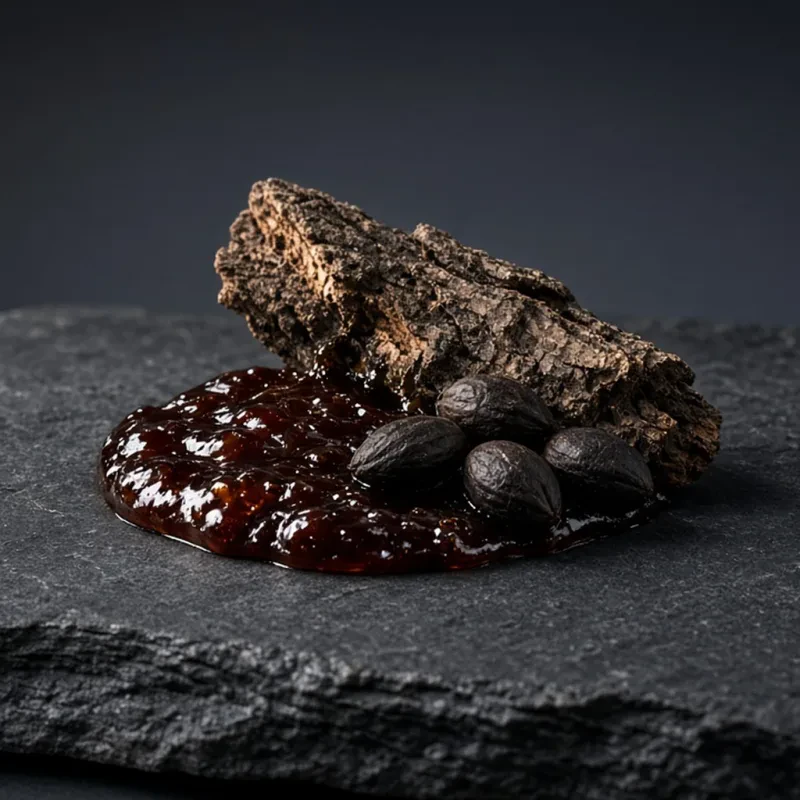
Peru balsam is a thick, dark resinous substance obtained from the Myroxylon tree. Despite its name, it comes not from Peru but from El Salvador, from the so-called Balsam Coast.
How it smells: warm, sweet and balsamic: vanilla, cinnamon, a faintly smoky and caramel shade. Peru balsam sounds dense, enveloping and oriental, like old-fashioned incense.
To obtain the balsam, the bark is cut and scorched, and the resin that seeps out is soaked up with rags. Natural balsam can cause irritation, so the international IFRA rules allow only its purified fractions.
What it pairs with: with vanilla and tonka beans — dense amber compositions, with cinnamon — spicy warmth, with rose — a balsamic flower, with incense — a resinous trail, with tobacco — dark evening fragrances.
Good to know: the balsam was called “Peruvian” because in colonial times it was shipped to Europe through Peruvian ports, and merchants took it for a Peruvian product.