


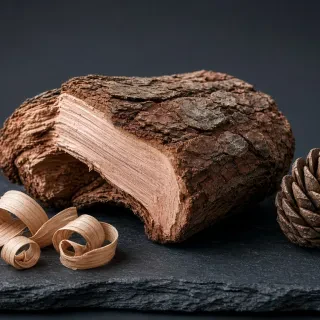


- Latin name
- Pinus sylvestris
- Family
- Pine family (Pinaceae)
- Origin
- Northern and Eastern Europe
- Parts used
- needles and young twigs
- Raw materials
- essential oil
- Extraction
- steam distillation
- Olfactory group
- aromatic (coniferous)
- Position in the pyramid
- top note
- Synthetic substitutes
- bornyl acetate, alpha-pinene, limonene
Pine needle oil is obtained by distilling the needles and young twigs of the Scots pine — a tree familiar to everyone from our forests. It is one of the simplest and cleanest “forest” smells in perfumery.
How it smells: fresh, resinous and invigorating: green needles, pine resin, the cool air of a pine forest, a faintly lemony and balsamic shade. Pine needles add cleanness, energy and space to a fragrance.
The familiar smell of a pine forest comes from terpenes — pinenes and bornyl acetate — which trees release into the air, especially in hot weather. That is why the scent in a pine wood is so dense in summer.
What it pairs with: with juniper and cypress — “mountain” coniferous compositions, with lavender — fresh fougères, with incense — resinous smoke, with citrus — lively sporty fragrances, with vanilla and amber — a warm winter conifer.
Good to know: pine needles are rich in vitamin C: in the old days people drank pine-needle infusions in winter to ward off scurvy.


