
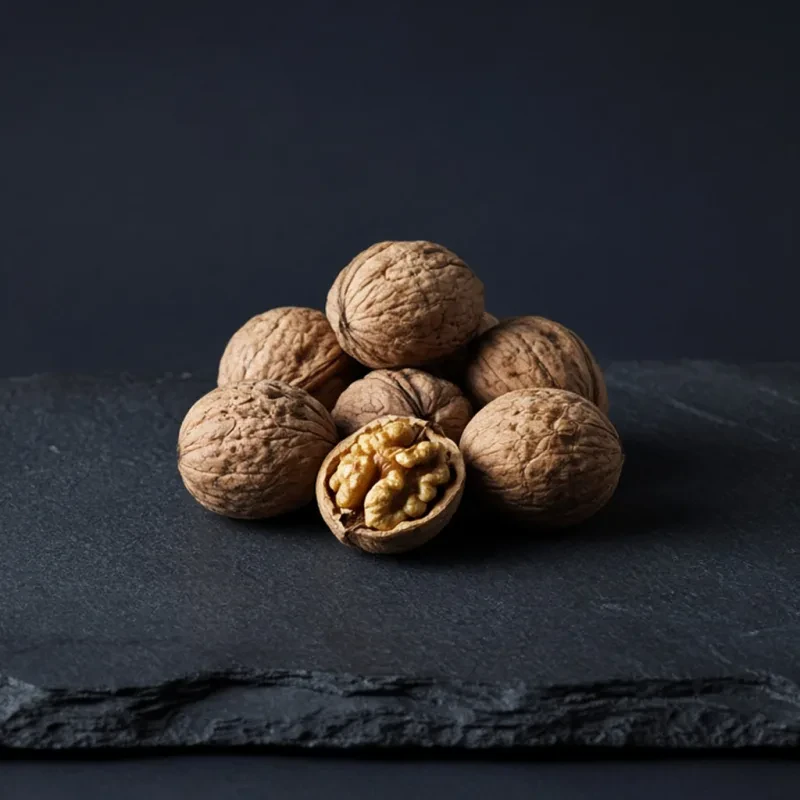

- Latin name
- Juglans regia
- Family
- Walnut family (Juglandaceae)
- Origin
- an accord composed by the perfumer
- Parts used
- nut kernels (as the reference for the scent)
- Raw materials
- gourmand nut accords
- Extraction
- synthesis
- Olfactory group
- gourmand (nutty)
- Position in the pyramid
- heart and base
- Synthetic substitutes
- pyrazines, lactones, woody molecules
Walnut means the kernels in a hard shell, familiar to everyone from childhood and home baking. In perfume it is recreated with a gourmand nut accord — warmer and drier than sweet nutty notes.
How it smells: warm, nutty and slightly bitter: a toasted kernel, a dry woody shell, a light oily and skin-like shade. Walnut sounds cosy, natural and a little autumnal.
The hallmark of walnut is the slight bitterness of the thin skin on the kernel. The perfumer conveys it by combining roasted pyrazines with dry woody notes, so the note sounds less sweet than hazelnut or praline.
What it pairs with: with caramel and honey — nutty desserts, with woods and tobacco — autumnal “study” fragrances, with coffee — a warm gourmand base, with vanilla — soft sweetness, with cognac — evening compositions.
Good to know: the walnut kernel looks like a brain — which is why people in antiquity believed walnuts were good for the mind.

