- Latin name
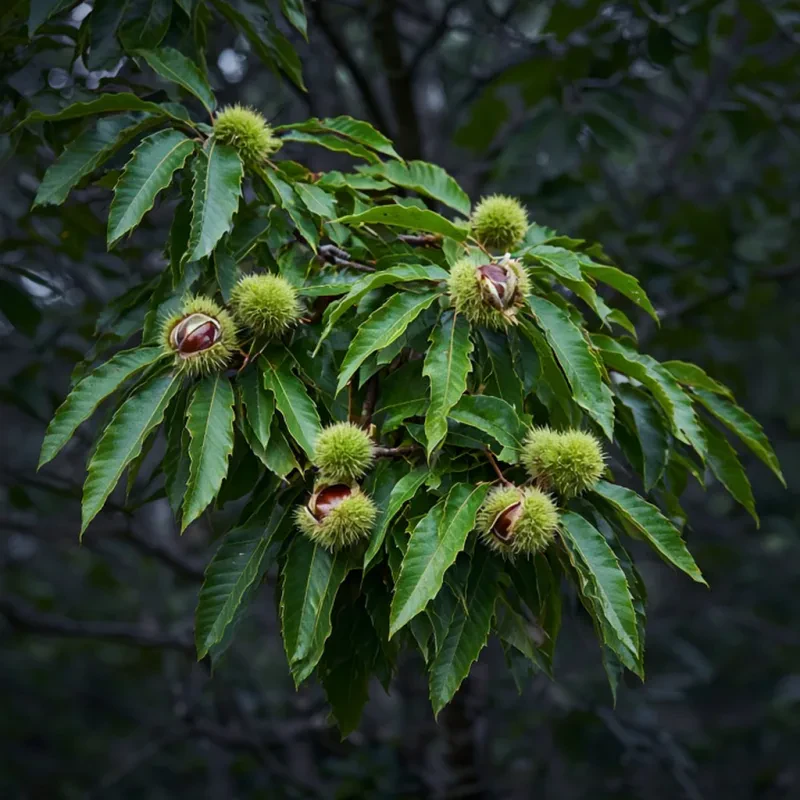
- Castanea sativa
- Family
- Beech family (Fagaceae)
- Origin
- the scent is created in the laboratory
- Parts used
- no material is obtained from the nuts
- Raw materials
- gourmand nut accords
- Extraction
- synthesis
- Olfactory group
- gourmand (nutty)
- Position in the pyramid
- heart and base
- Synthetic substitutes
- pyrazines (roasted notes), vanillin, maltol
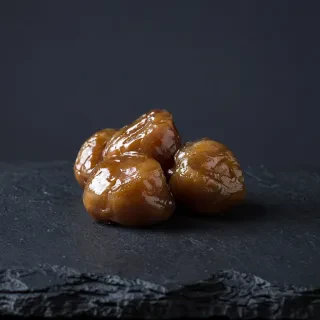
Chestnut in perfumery means the fruit of the sweet chestnut: roasted on a brazier or candied, like the French marron glacé. Its scent is recreated with a gourmand nut accord.
How it smells: warm, sweetish and floury: a roasted nut, a faintly smoky crust, soft vanilla and caramel. Chestnut sounds autumnal and cosy, like an evening walk through town with a paper cone in hand.
Do not confuse the two: the sweet chestnut and the horse chestnut that grows in our cities are different plants from different families. Horse chestnuts are inedible, and the perfume note refers to the sweet one.
What it pairs with: with vanilla — “candied chestnut”, with caramel — an autumn dessert, with iris — powdery nutty softness, with woods — warm dryness, with spices — winter fragrances.
Good to know: marron glacé is one of France's most labour-intensive desserts: the chestnuts are gradually soaked in sugar syrup for several days so they do not fall apart.