

- Latin name
- Ribes nigrum
- Family
- Gooseberry family (Grossulariaceae)
- Origin
- an accord; natural basis — blackcurrant bud absolute
- Parts used
- leaves (as the reference for the scent)
- Raw materials
- green-fruity accords, bud absolute
- Extraction
- synthesis; extraction of the buds
- Olfactory group
- green, fruity
- Position in the pyramid
- top note
- Synthetic substitutes
- sulphur-containing blackcurrant molecules, cis-3-hexenol
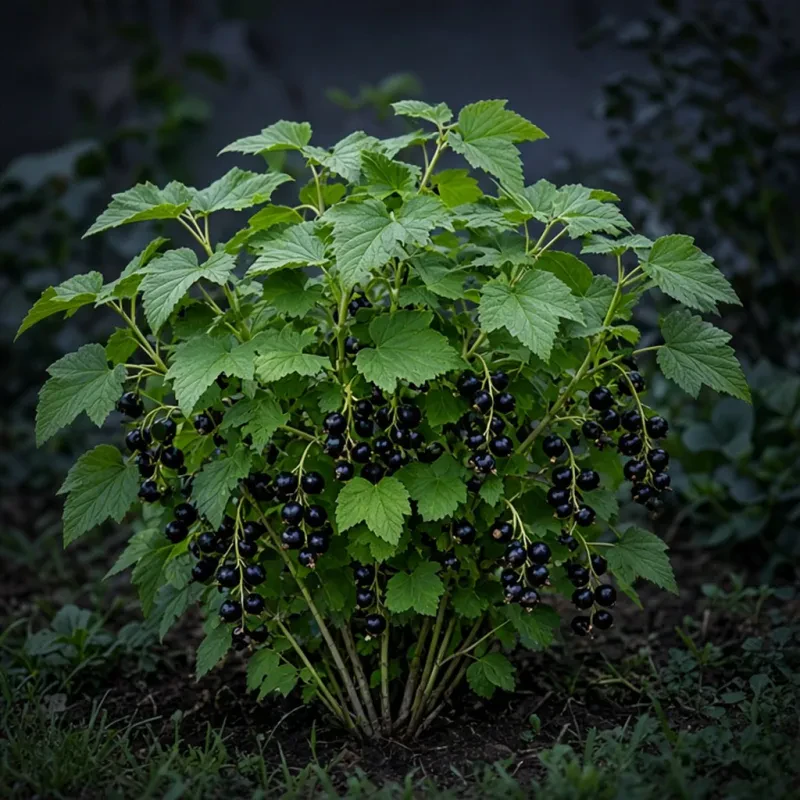
Blackcurrant leaves are a familiar smell of the summer garden: rub a leaf between your fingers and it smells of greenery and berry at once. The scent is so valued that blackcurrant leaves have long been added to tea and pickles.
How it smells: fresh, green and fruity: juicy leaves, a faintly tart berry note, a light bitterness and a spicy sharpness. Blackcurrant leaves sound more natural and greener than the berry itself.
The special blackcurrant shade of the leaves and buds comes from sulphur compounds in minute amounts — the same as in grapefruit and passion fruit. They make the note so bright and alive.
What it pairs with: with blackcurrant — “the whole currant”, with rose — a green garden rose, with mint — a fresh herbal tea, with grapefruit — sharp citrus openings, with musk — transparent green fragrances.
Good to know: in Ukrainian cooking blackcurrant leaves have long been added to pickled cucumbers and jam — for their aroma and because they help keep vegetables crisp.

